Rhinoplasty
Consultations offered at our three convenient locations in Manhattan, New York City and Lake Success, NY

Rhinoplasty is a surgical procedure that modifies the nose’s proportions, shape, or size for functional and/or aesthetic purposes. While some individuals seek the surgery for medical reasons, such as impaired nasal airflow, others seek to address cosmetic concerns. Regardless of the motivation, the procedure often yields outcomes that significantly enhance a patient’s confidence and overall quality of life.
At FORMA in New York City, Dr. James P. Bradley is a board-certified plastic surgeon with more than 25 years of experience specializing in intricate cosmetic, functional, and craniofacial surgery for patients of all ages. He is dedicated to improving the lives of his patients through his work.
To explore your options for rhinoplasty with Dr. Bradley, submit our online contact form or call our Manhattan office at (212) 324-3777.
Contents
Before and After Photos


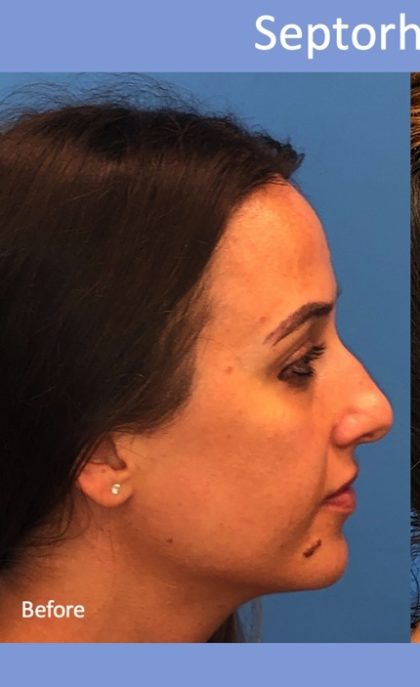
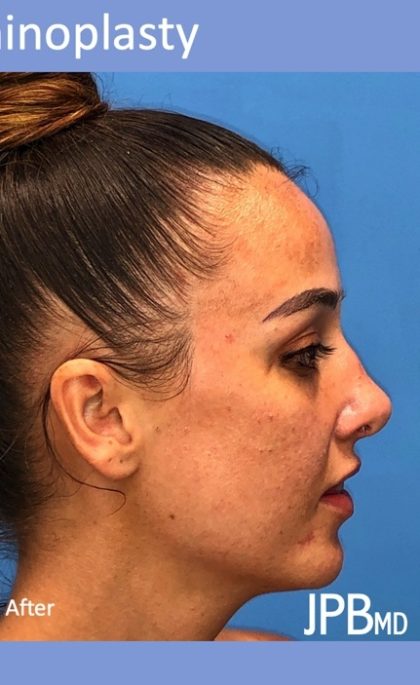
About Rhinoplasty
Rhinoplasty, commonly known as a “nose job,” is one of the most complex and transformative procedures in plastic surgery. At its core, it is the surgical reshaping of the nose to improve its appearance, its function, or both. Because the nose is the central anchor of the face, even subtle adjustments can create a profound impact on facial harmony. Dr. Bradley approaches every rhinoplasty with a unique blend of artistry and medical precision, ensuring the new nasal structure complements the patient’s existing features while maintaining or improving respiratory health.
The procedure is generally categorized into three sub-types: cosmetic, functional, and revision. Cosmetic rhinoplasty addresses aesthetic concerns such as a dorsal hump, a bulbous tip, or an asymmetrical bridge. Functional rhinoplasty focuses on internal structures like the septum or turbinates to correct breathing obstructions. As a specialist in the field, Dr. Bradley performs revision rhinoplasty on patients who have already undergone surgery but require further improvements to their nasal airway or appearance. Through each type of rhinoplasty, Dr. Bradley helps patients achieve a result that not only looks natural but also enhances their quality of life through improved breathing and increased self-esteem.
Rhinoplasty Techniques
Dr. Bradley uses two primary techniques to perform rhinoplasty, and the choice between the two often depends on the necessary degree of correction.
- Closed Rhinoplasty: In a closed approach, Dr. Bradley makes all incisions inside the nostrils. With less surgical visibility, this technique is typically reserved for patients requiring only minor bridge adjustments or cosmetic alterations. A closed procedure produces no visible scarring and may promote a faster recovery. Additionally, it can be effective for correcting nasal valve collapse, which helps to improve airflow. (1)
- Open Rhinoplasty: This technique involves a small incision across the columella, the narrow strip of tissue separating the nostrils. This allows Dr. Bradley to lift the nasal skin and gain full visibility of the underlying structure. It is the preferred method for complex revisions or significant tip reshaping, providing the highest level of precision. (2) While a minor horizontal scar may remain on the columella, specialized incision patterns ensure it is extremely discreet and barely visible once healed.
Benefits
The functional improvements and aesthetic enhancements that rhinoplasty provides can be life-changing. Specific advantages include:
- Improved Facial Symmetry: By balancing the central feature of the face with the chin and forehead, the entire face becomes more harmonious.
- Enhanced Breathing: Correction of a deviated septum or enlarged turbinates can eliminate chronic congestion and snoring.
- Refined Nasal Tip: Addressing a drooping or “pinched” tip creates a more youthful, elegant profile.
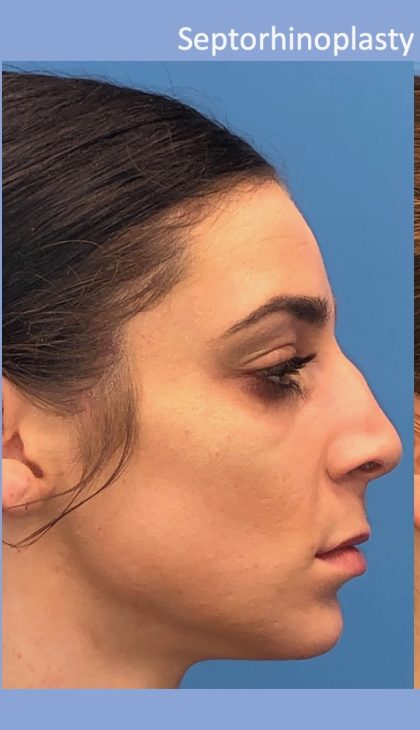
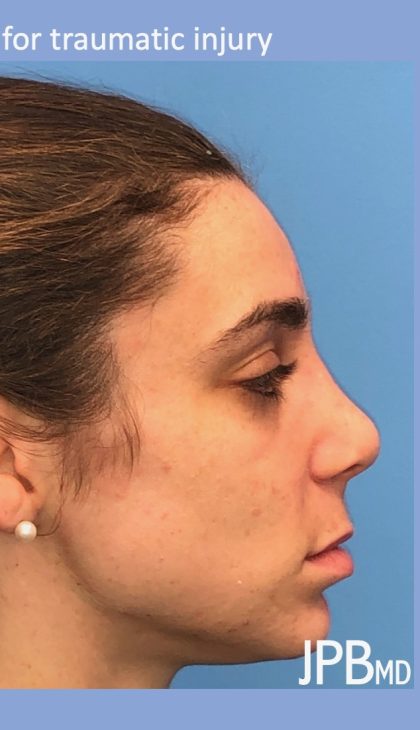
- Restoration After Injury: Repairing nasal fractures or deformities caused by trauma can significantly improve quality of life.
- Permanent Results: Surgical rhinoplasty provides an enduring solution to functional and aesthetic nasal concerns.
Candidates
Potential candidates for rhinoplasty should be in good overall health and have achieved facial maturity. This typically occurs at age 15-16 for female patients and 17-18 for male patients. Patients should be non-smokers or willing to suspend nicotine use for an extended period before and after surgery. It is essential that patients have realistic expectations and a clear understanding of the goals they wish to achieve. Dr. Bradley will fully determine candidacy during the personal consultation.
Personal Consultation
During this in-person meeting, Dr. Bradley will conduct a thorough review of your medical history, including any previous surgeries, breathing problems, or facial trauma. He will perform a physical examination of your nose, assessing bone structure, skin quality, and any abnormalities. You will discuss your aesthetic preferences and functional concerns. Dr. Bradley also employs 3D image morphing, allowing you to have specific input into your nasal shape preferences and see your potential outcomes in real time. With all of this information, Dr. Bradley will create your customized treatment plan, explaining the surgery and recovery process in detail to set clear, achievable expectations.
To start exploring your options for rhinoplasty and schedule your personal consultation, call FORMA at (212) 324-3777 or submit our online contact form.
Preparation
To ensure a smooth surgery and efficient, successful recovery, it is essential that you follow the detailed preoperative instructions Dr. Bradley and the FORMA team provide. If applicable, you must stop smoking 6-8 weeks before surgery and continue to abstain for at least 4 weeks afterward. You will need to avoid blood-thinning medications, supplements, and alcohol for a couple of weeks before surgery. Finally, please also schedule time off from work and other commitments, fill all necessary prescriptions, and arrange for a responsible adult to transport you on surgery day and stay with you for the first 24 hours of recovery.
Procedure
Dr. Bradley will perform your rhinoplasty under general anesthesia or intravenous sedation. Once you are comfortable, Dr. Bradley makes the planned incisions (open or closed) to access the nasal framework. He carefully reshapes the bone and cartilage; removing a hump, narrowing the bridge, or refining the tip. If the septum is deviated, he will straighten it to improve airflow. Once Dr. Bradley achieves the desired shape, he gently redrapes the nasal tissue and skin and closes the incisions with fine sutures. In most cases, he applies a splint to the outside of the nose to provide support during the initial healing phase.
Recovery
During the first week, most patients experience swelling and bruising around the eyes, which you can manage with cold compresses and prescribed medication. The external splint can come off after about a week, at which point you can return to work and gentle activities. While the majority of swelling subsides within 3 to 4 weeks, the final refinements of the nasal tip can take up to a full year to completely materialize. Be sure to attend all follow-up appointments so that Dr. Bradley can track your healing progress. He will also provide a specific timeline for resuming strenuous exercise and contact sports to protect your new nasal structure.
Results
Rhinoplasty offers a virtually permanent solution. As the swelling fades, you will notice a nose that appears more naturally aligned with your other facial features. If you receive functional improvements, you will breathe with greater ease and sleep more soundly. While your nose will continue to age naturally, following post-operative care instructions and maintaining a healthy lifestyle will help preserve the enhancements for years to come.
Corresponding Procedures
Some patients choose to combine their rhinoplasty with other aesthetic procedures to achieve an even greater facial transformation. Some corresponding procedures that help create optimal balance include:
- Chin Enhancement: When a chin is recessed or lacks definition, it can disrupt facial proportions and cause the nose to seem disproportionately large. Performing a mentoplasty in conjunction with rhinoplasty helps refine the shape and projection of the lower face, resulting in superior facial symmetry and balance.
- Brow Lift: While rhinoplasty refines the central aesthetics of the face, a brow lift restores youth and balance to the upper third. If you are noticing a heavy or tired appearance around your eyes, a brow lift may be an excellent complement to your rhinoplasty, creating a cohesive and harmonious rejuvenation across your entire face.
- Blepharoplasty: Eyelid surgery addresses concerns such as drooping upper eyelids or puffiness under the eyes. By rejuvenating the periocular area, this procedure restores brightness and vitality to the eyes, providing a more rested appearance. It can be combined with rhinoplasty to further enhance natural beauty.
Cost of Rhinoplasty in New York City
The cost of rhinoplasty varies according to several factors, including the complexity of the case (primary vs. revision surgery), the surgical technique, and whether or not you choose to include any corresponding procedures. As a highly specialized board-certified plastic surgeon, Dr. Bradley’s fees reflect his extensive experience and the personalized care our team provides. During your consultation, Dr. Bradley will provide you with a comprehensive cost breakdown that reflects the details of your personal treatment plan.
To start planning your rhinoplasty journey at FORMA, call (212) 324-3777 or submit our online contact form.
FAQ
Is rhinoplasty painful?
Most patients describe the sensation as “stuffiness” or pressure rather than sharp pain. Discomfort is well-managed with prescribed pain relief and usually subsides significantly within the first few days. Because we administer anesthesia, you will not feel pain during the procedure itself.
How long is the rhinoplasty recovery time?
Most patients return to sedentary work or school within 7 to 10 days. Strenuous exercise must wait for 3 to 4 weeks, and contact sports for at least 6 weeks, or until Dr. Bradley gives clearance.
Will I have visible scarring after rhinoplasty?
In closed rhinoplasty, there are no visible scars. In open rhinoplasty, a tiny scar on the underside of the nose usually fades to the point of being virtually invisible within a few months.
When will I see my final rhinoplasty results?
The first major changes will be evident after removing your splint, but final, fully developed results will emerge as the last bit of swelling at the tip of the nose resolves, typically at the 12-month mark.
References
- Gupta R, John J, Ranganathan N, et al. Outcomes of Closed versus Open Rhinoplasty: A Systematic Review. Archives of Plastic Surgery. 2022;49(05):569-579. https://doi.org/10.1055/s-0042-1756315
- Raggio BS, Asaria J. Open Rhinoplasty. PubMed. Published 2021. https://www.ncbi.nlm.nih.gov/books/NBK546628/